Arrived in Tokyo after a pleasant flight on Nippon Airlines. Actually took us longer to get through all of the requirements at Haneda Airport than it did to fly to Tokyo from Seoul. Arrival card to be completed of which we knew nothing about. Another card to exit the airport, plus 3 or 4 passport checks. Mass of humanity, but organized chaos. Eventually made it to baggage claim where we met Noriko, our guide for the rest of the trip.
Another surprise upon arrival at the LOTTE City Hotel. We are definitely on an OAT experience trip, & the company has set about to ensure we do just that. We are once again in the heart of the city of 14 million (the broader metropolitan area has between 33 to 37 million) along a subway/train route. Because of this density, some of the hotels provide only small rooms, & I definitely am in one of these rooms; very intimate, but functional. Little nooks everywhere to put things or lose things.
We are on the move constantly, so we 3 have to carve out a bit of time for wine & non-traditional fare. I love the food, but how much rice can one eat!!
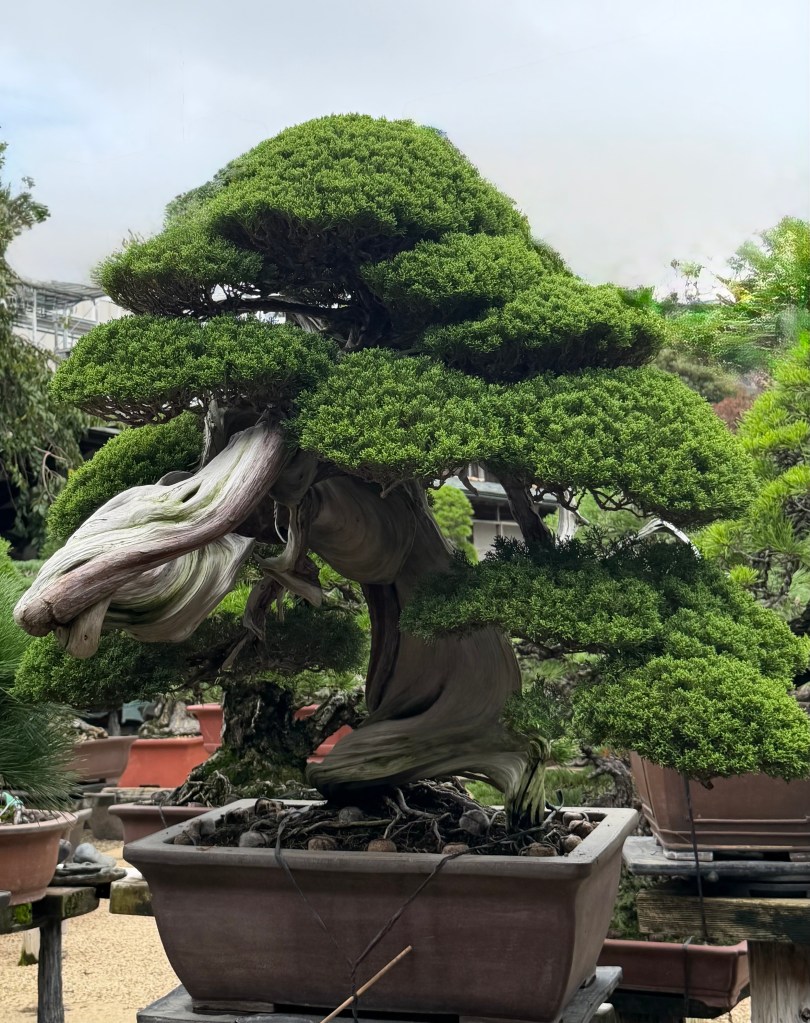
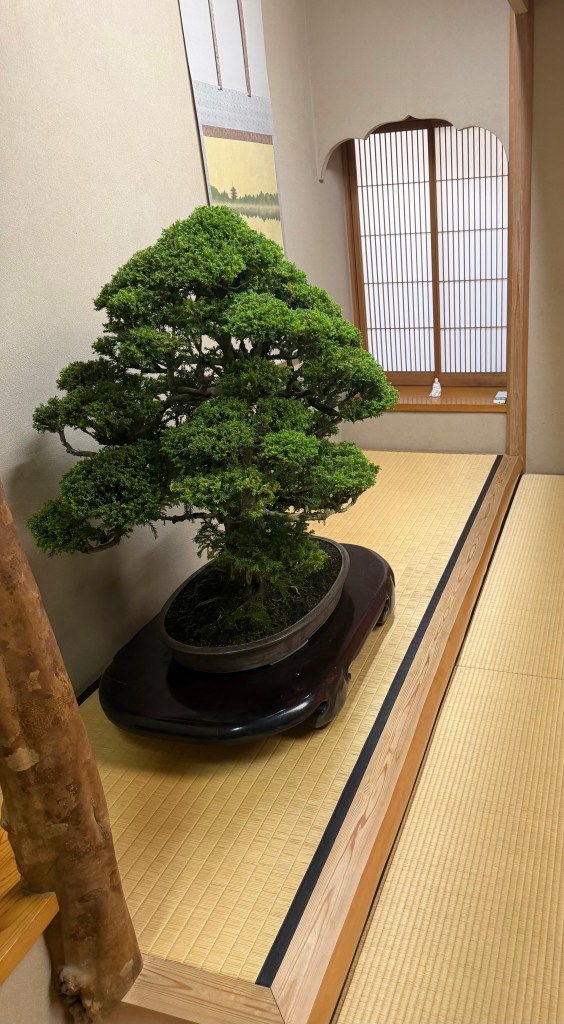
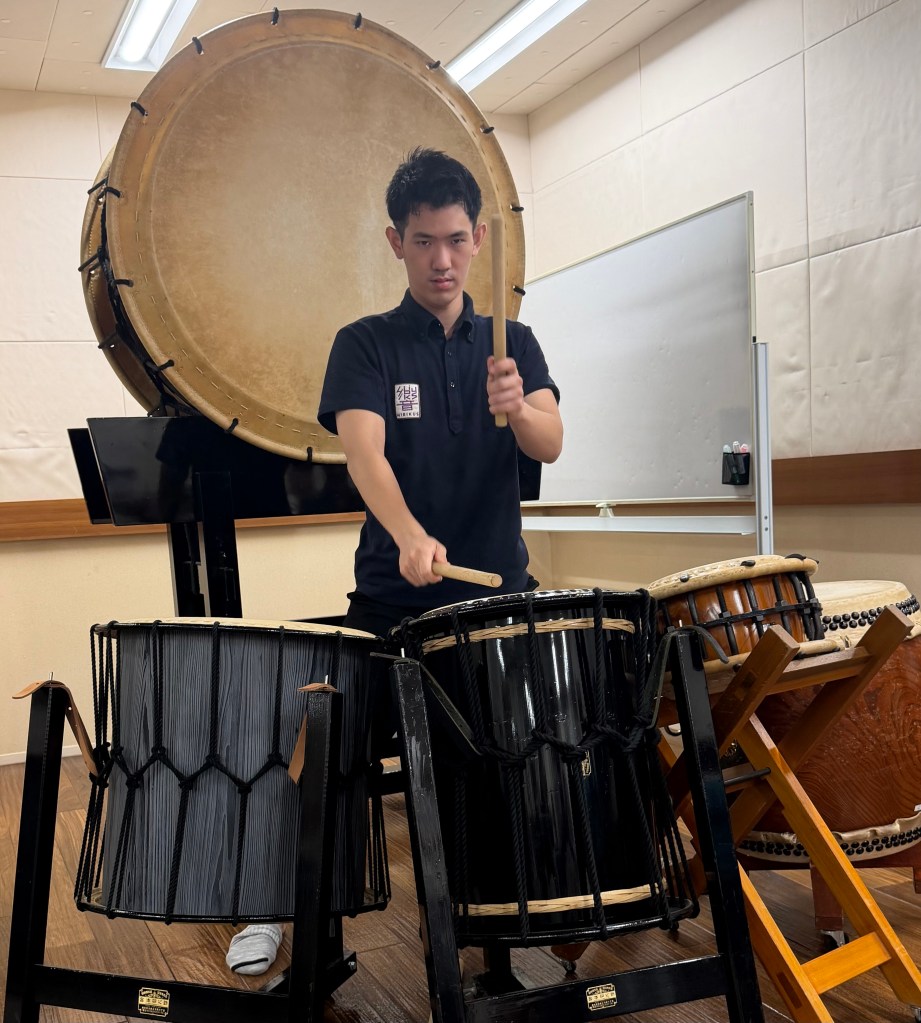
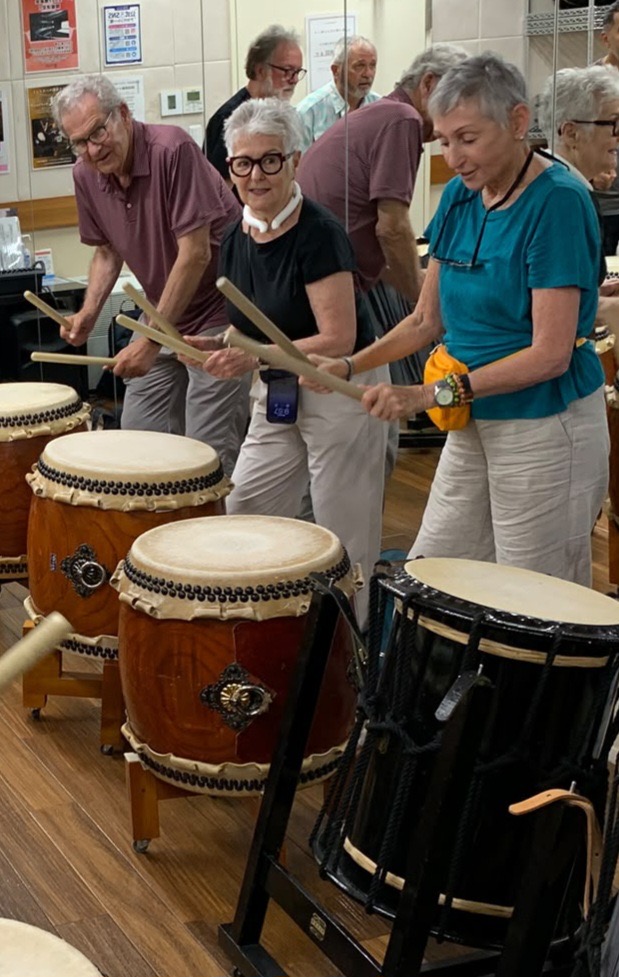
Cultural activities since arriving, in addition to food: Sumo wrestling history & demonstration; Bonsai Garden/Museum; Taiko drumming experience; Visit to a Buddhist Temple; Art Aquarium Museum. We traveled by subway, small bus & taxi. All timely & efficient. If one wants to shop, options are plentiful as are the most beautiful food markets within the centers. Lots of high end shopping meccas for Americans as the dollar is very favorable here. 153 Yen to the US Dollar.
City Scenes:
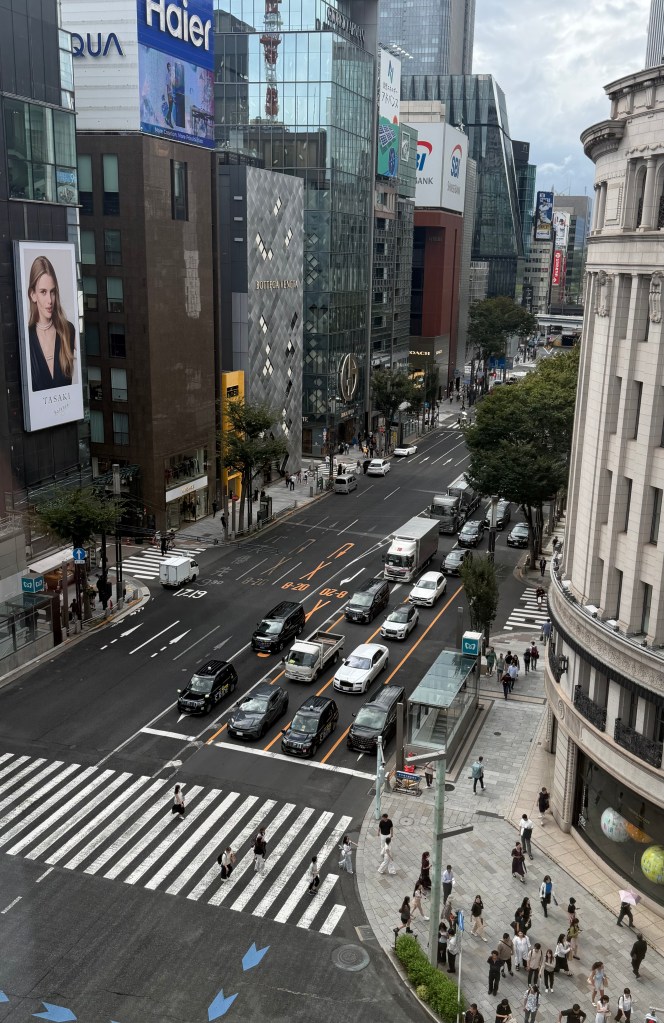
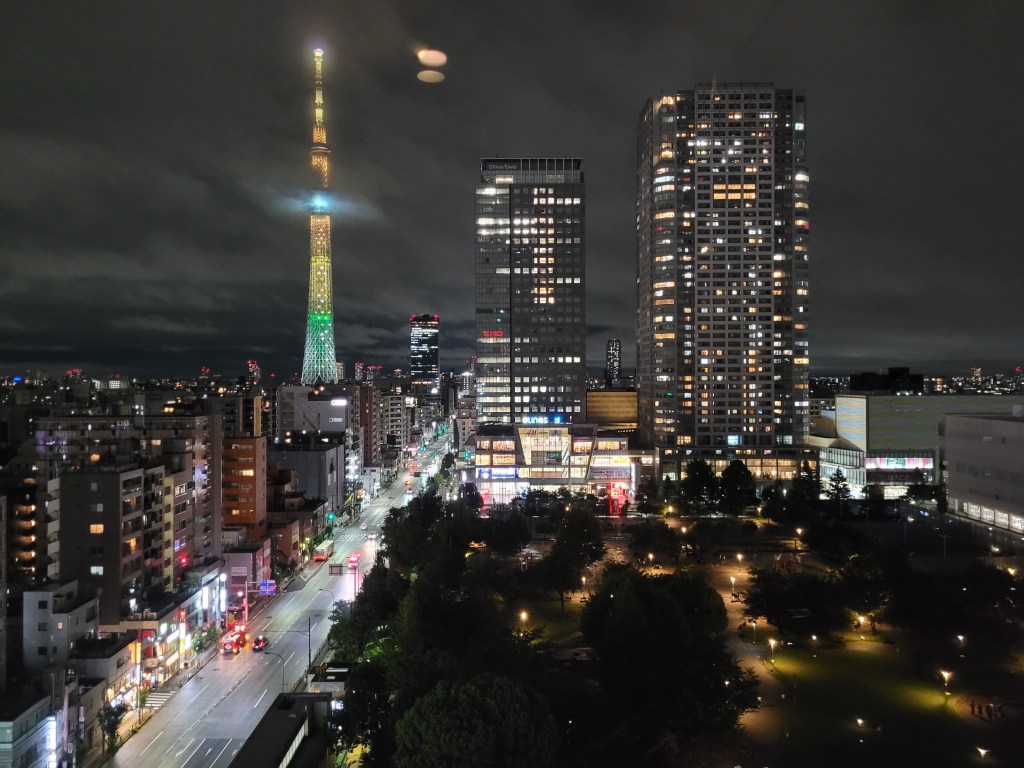
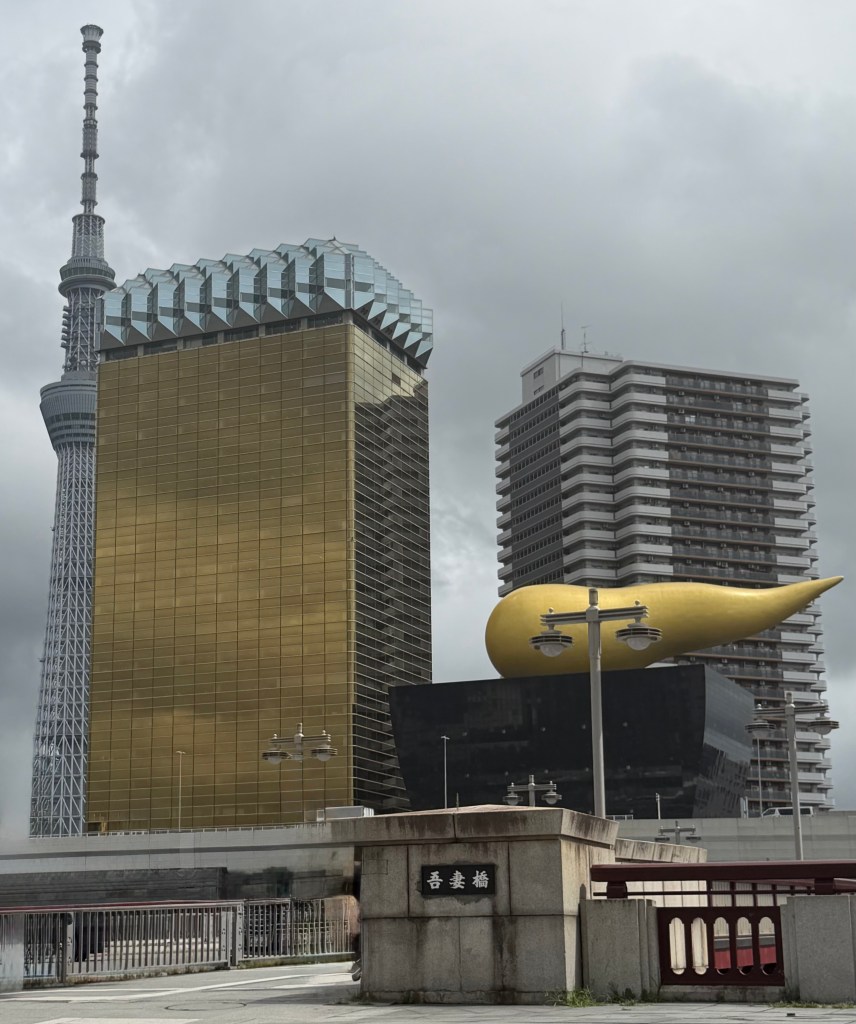
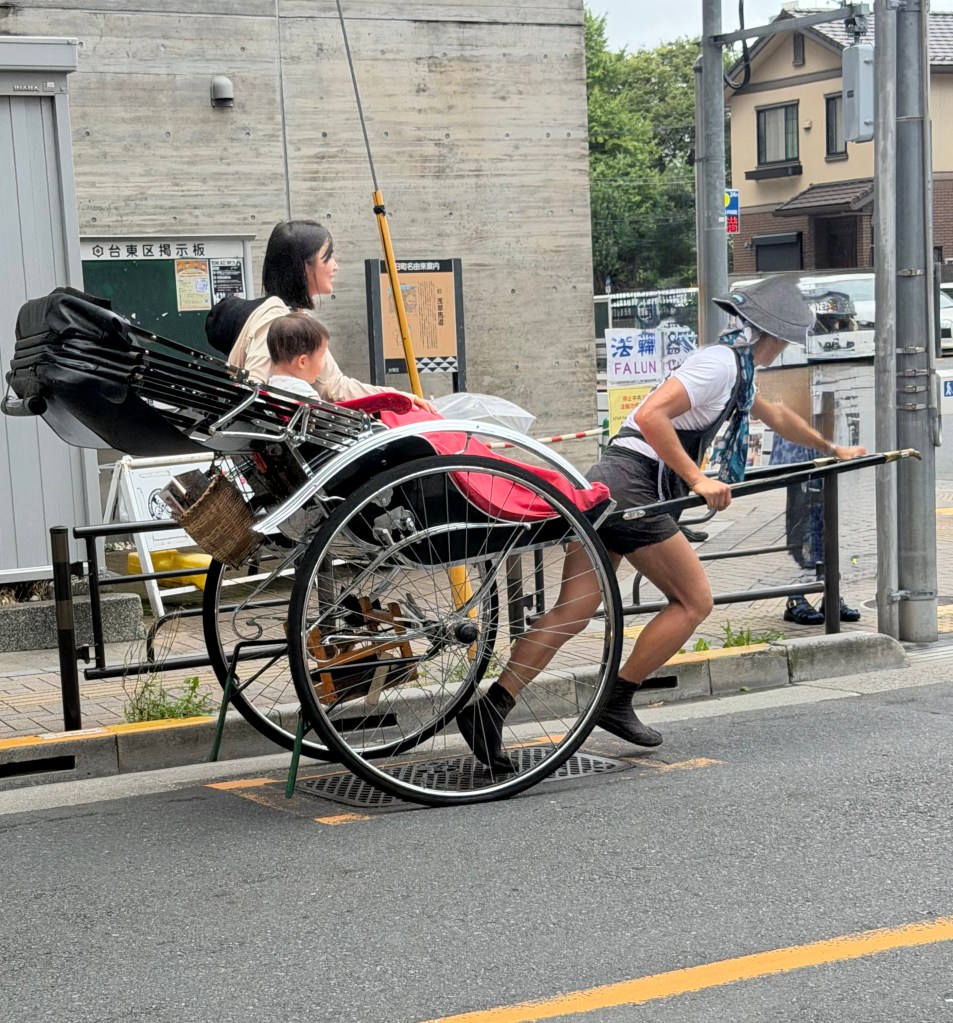
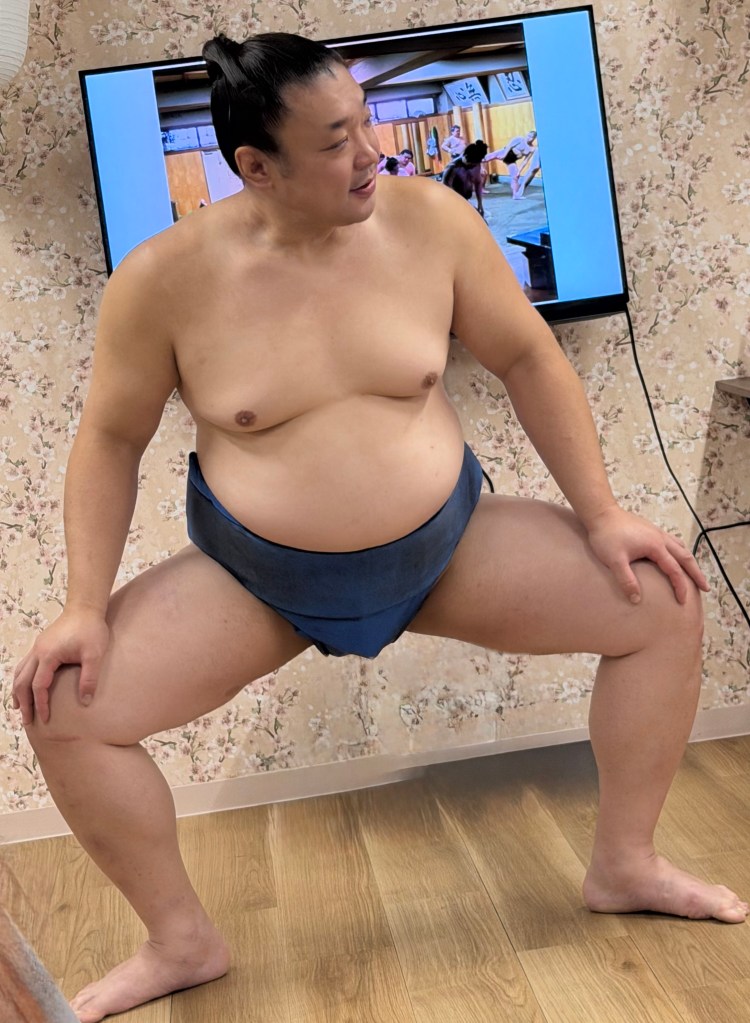
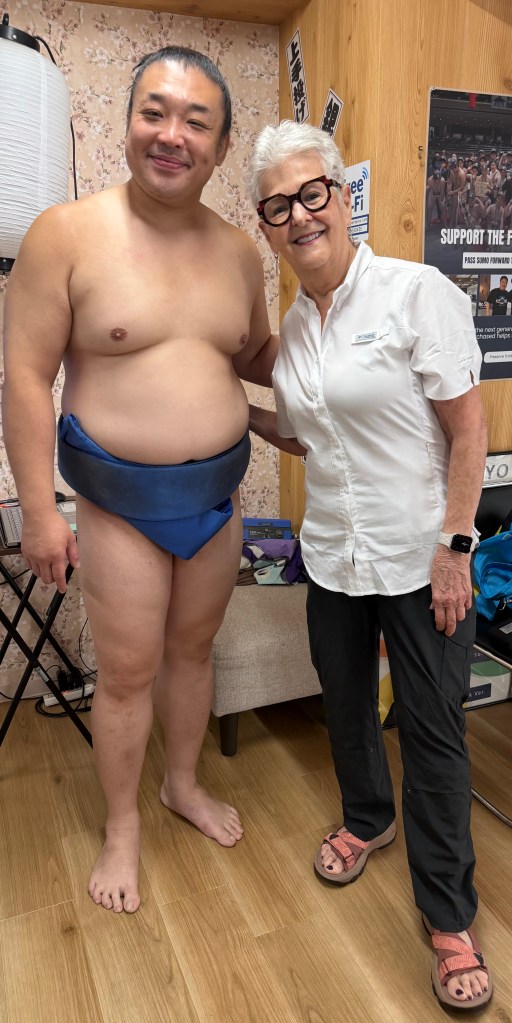
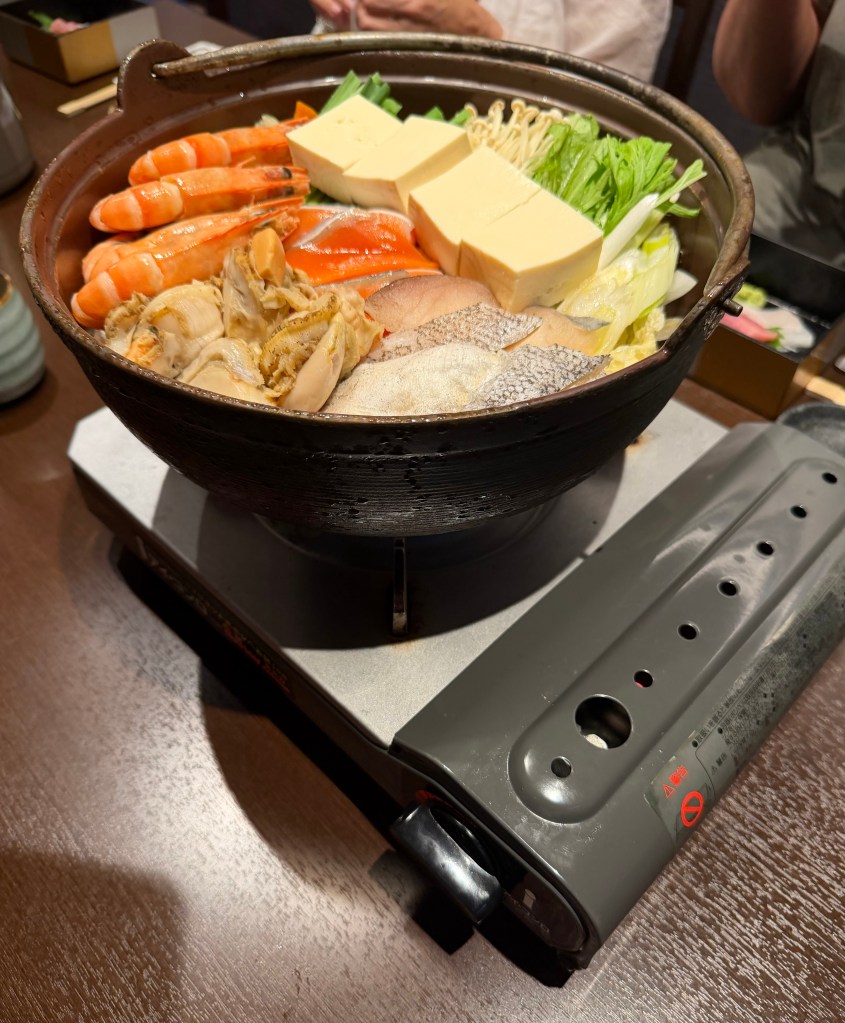
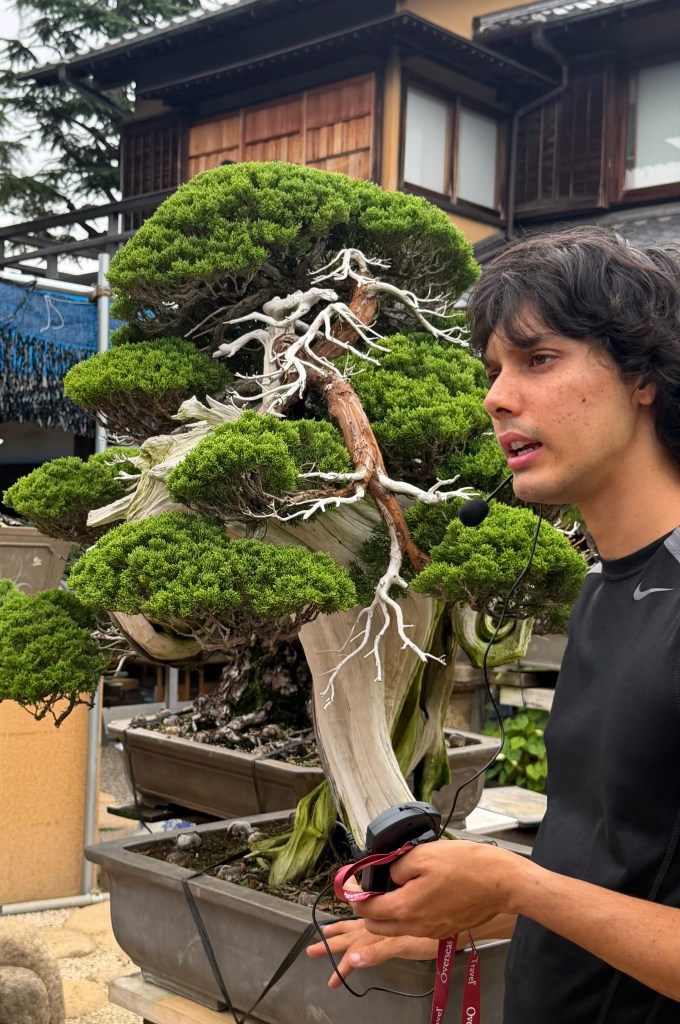
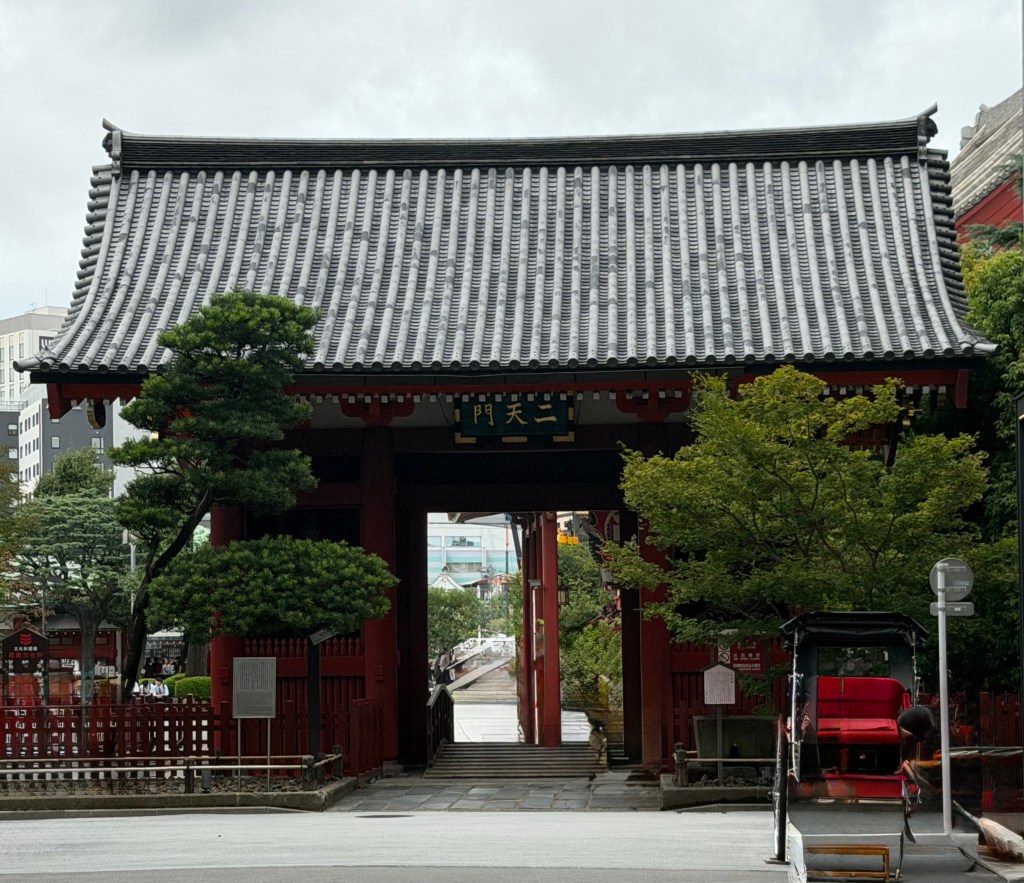
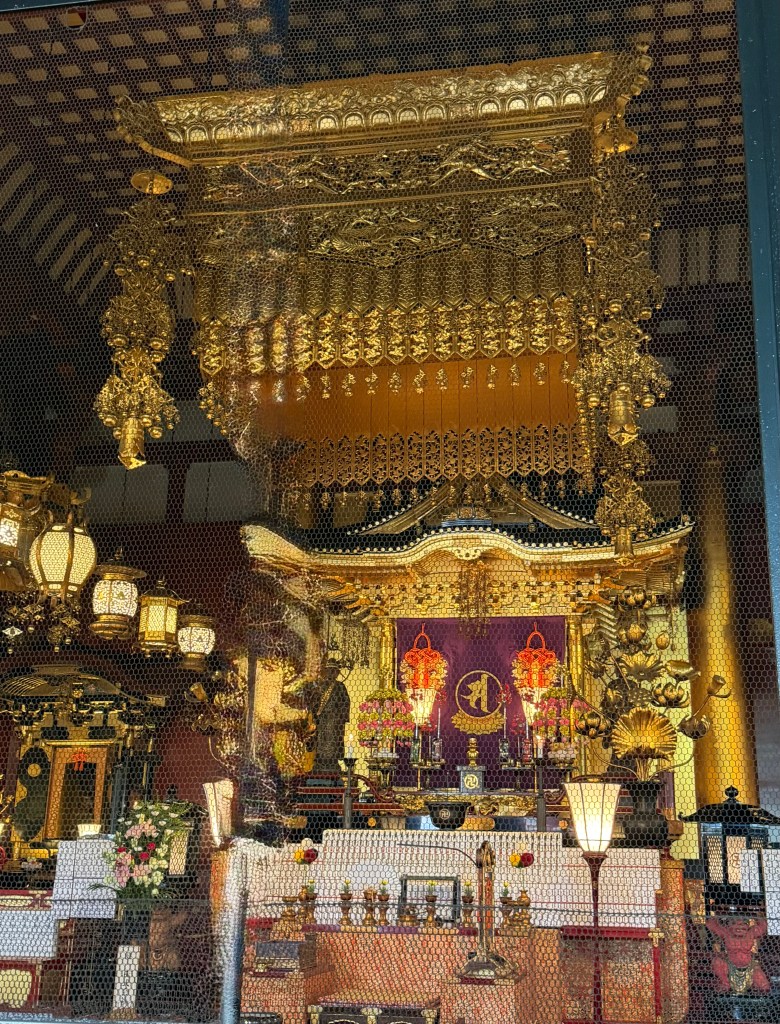
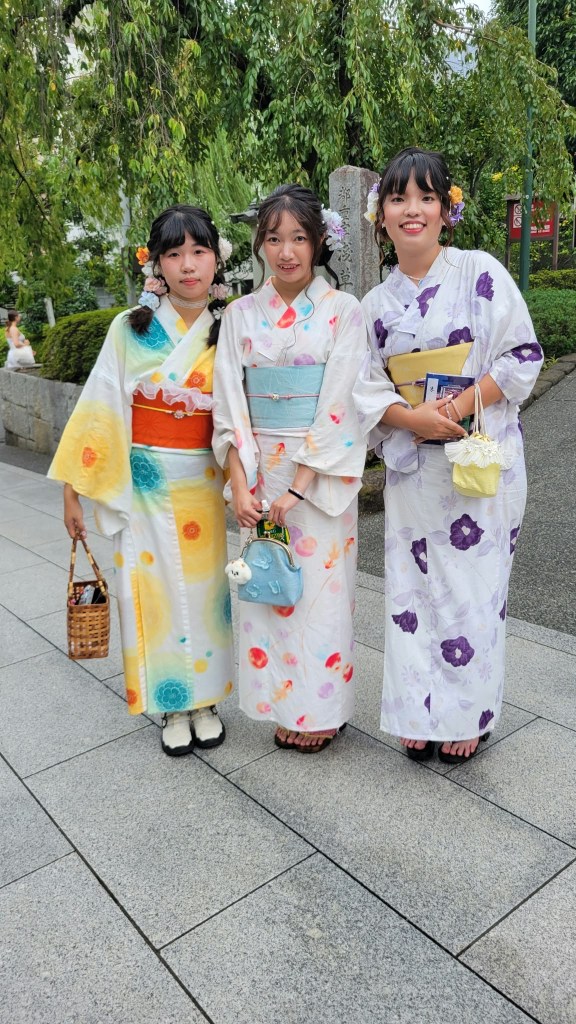
Street scene. Japan uses the left lane for driving because of British train engineers who introduced the practice when the use of trains was coming as a practical mode of transportation.View from the 10th floor of our hotel in Toyko, a huge city with over 13 million, while the metro area has a population of over 33 million.Asahi Beer building.Rickshaw taxi. Lots of work for the driver in this hot humid weather.Visited a sumo wrestling museum & learned from this retired competitor what it’s like to be wrestler. Sumo wrestling is the national sport of Japan. Tournaments, Hanbashos, are held 6 times/per year for 15 days; heavily attended major events. The heavier the better for a sumo wrestler who eats 6000 calories per day & trains for 6 hours. In a match, if any body part other than the bottoms of feet touches the ground, the wrestler is eliminated. Most wrestlers retire before 40.Photo op. Why not?Lunch: Hot pot of a variety of fish/seafood & vegetables. Traditional healthy dish of sumo wrestlers.Daniel, spending a minimum of 6 years with his Bonsai teacher learning this disappearing art form. He is from Puerto Rico & has been in Tokyo for 4 years. The most important part of Bonsai art is the tree trunk which is usually found in the mountains.Juniper from Northern Japan. Over 800 years old.Indoor display space at the Shunkaen Bonsai Museum a serene & peaceful world.Taiko drumming, a tradition that has been used throughout Japan’s history. Soundproof studio for obvious reasons.Trying our hand at Taiko drumming. Notice my “necklace”. Neck cooling device given to each of us by our guide, Noriko. It’s hot & humid in Tokyo right now.Entrance gate to the Asakua Buddhist Temple, the oldest Buddhist temple in Tokyo. Religion in Japan is a belief system rooted in the ideas of Shintoism & Buddhism. The two religions can coexist in Japan since the focus of Shintoism is on the spirituality of the living world or life, while Buddhism is more focused on the soul or afterlife.Altar at the Asskusa Buddhist Temple.As in Korea, these tourists rent the traditional dress when visiting the temple.
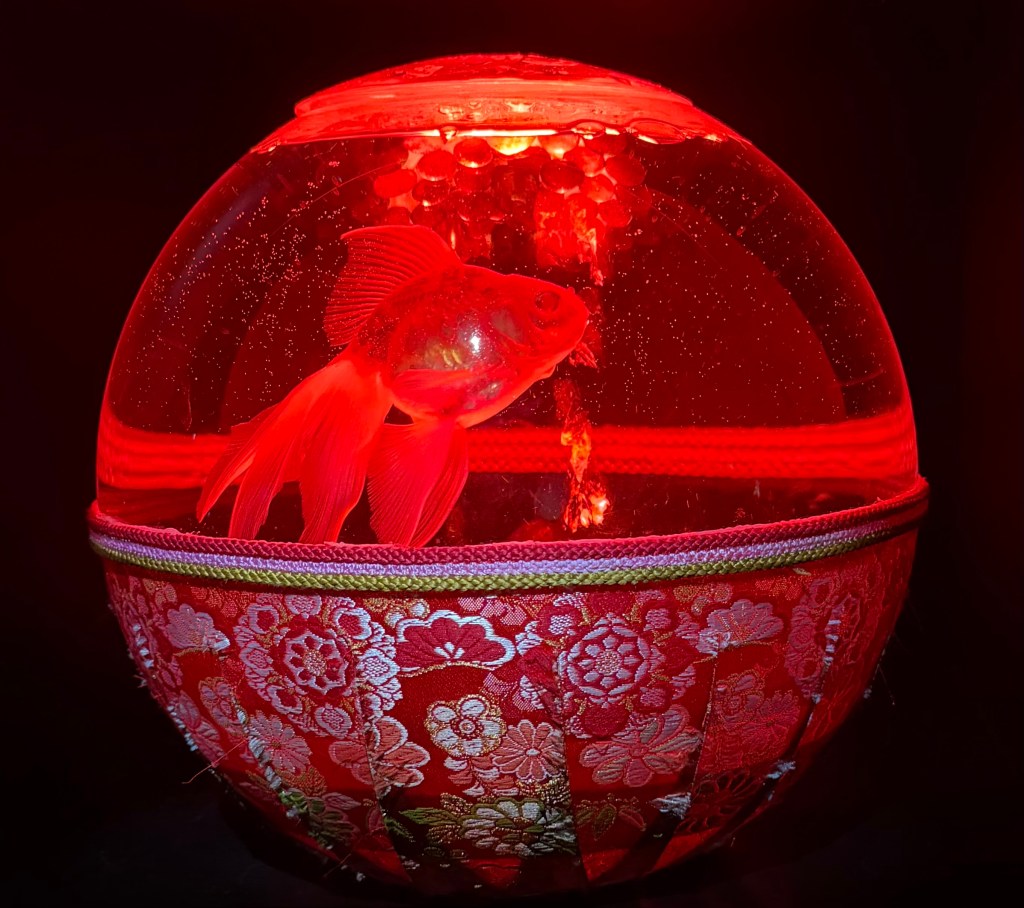
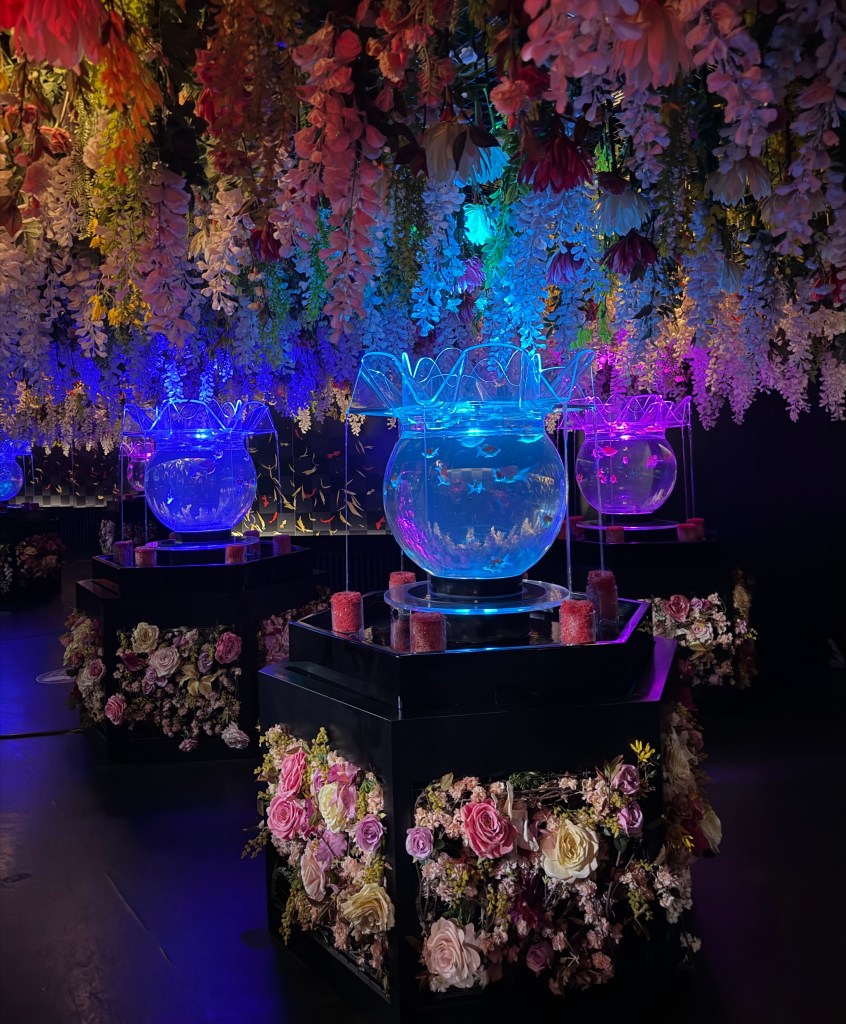
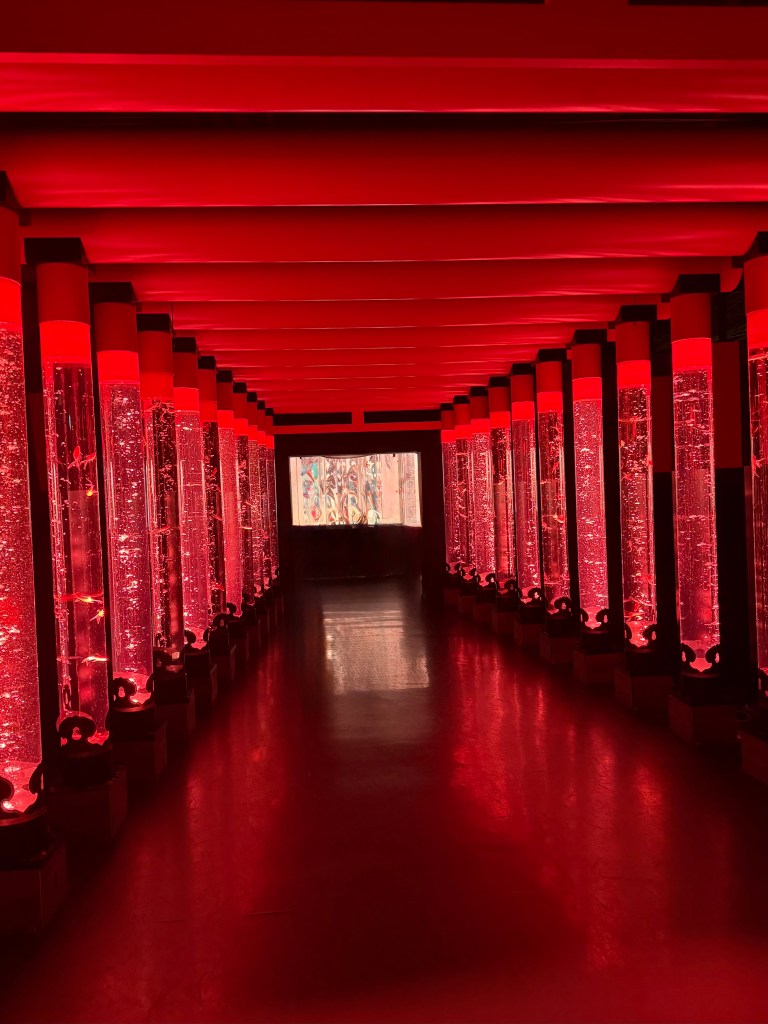
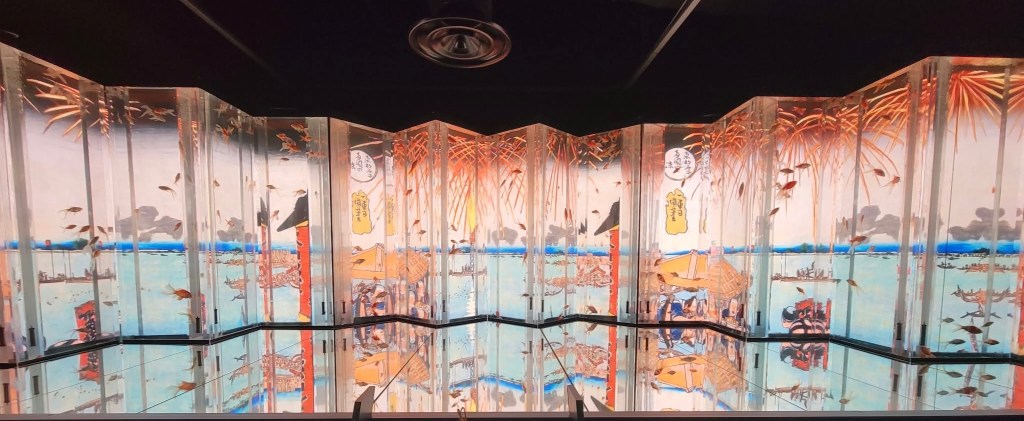
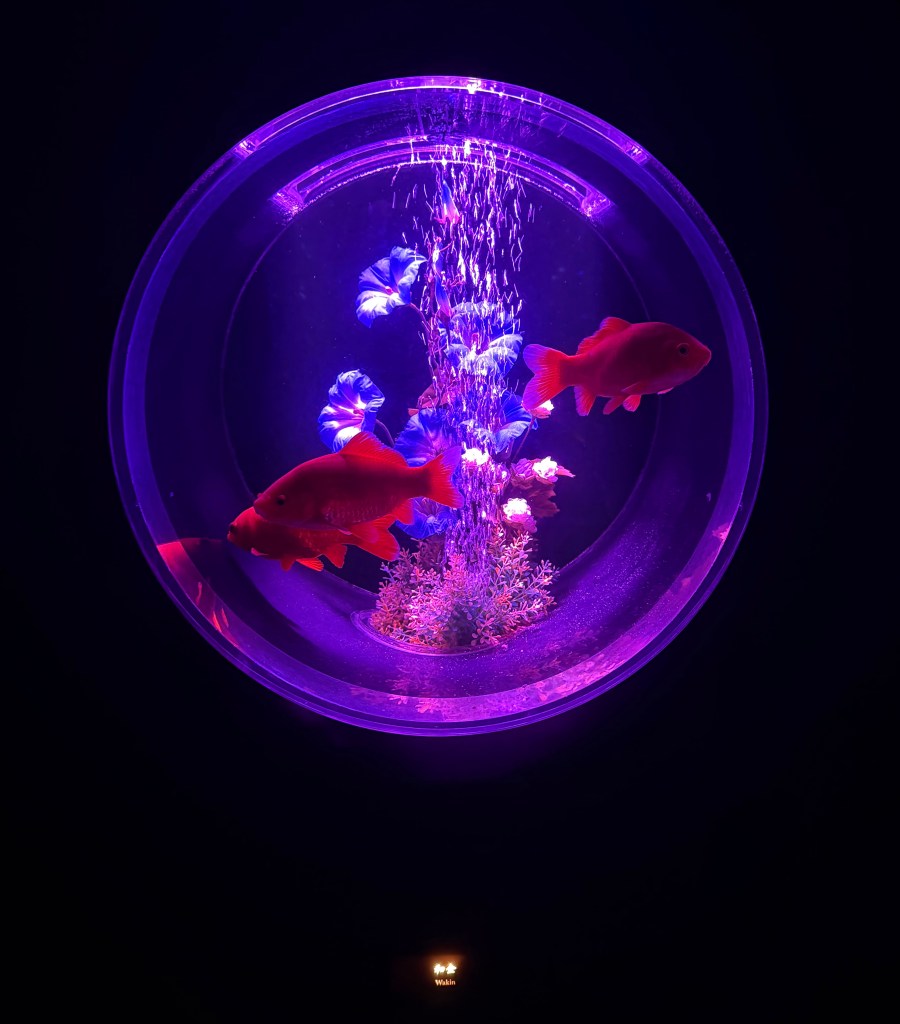
The following pictures are from the Art Aquarium Museum located at the top of a high end shopping center. Absolutely amazing display of goldfish which are important in Japanese culture because they symbolize good luck, wealth & prosperity.
Aquarium representing a story of Japanese life. Set to music with changing scenes & colors. Amazing.
Took an optional trip to see Mount Fuji, but weather conditions did not allow for us to see the highest mountain in Japan. On this excursion, we visited a restored silkworm farmer’s quarters, saw five beautiful lakes fed from the Mount Fuji snowfall and visited a beautiful kimono museum. Just a few pictures, & then I have to sign off. Very tired.
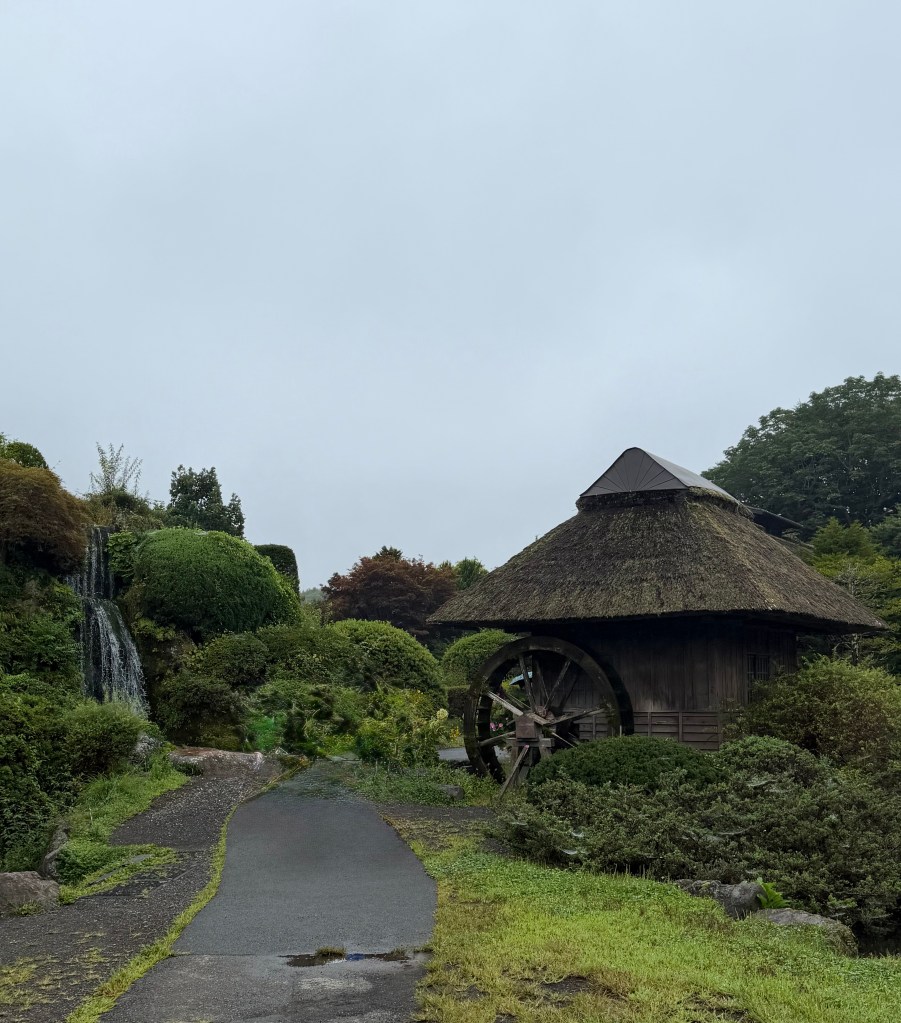
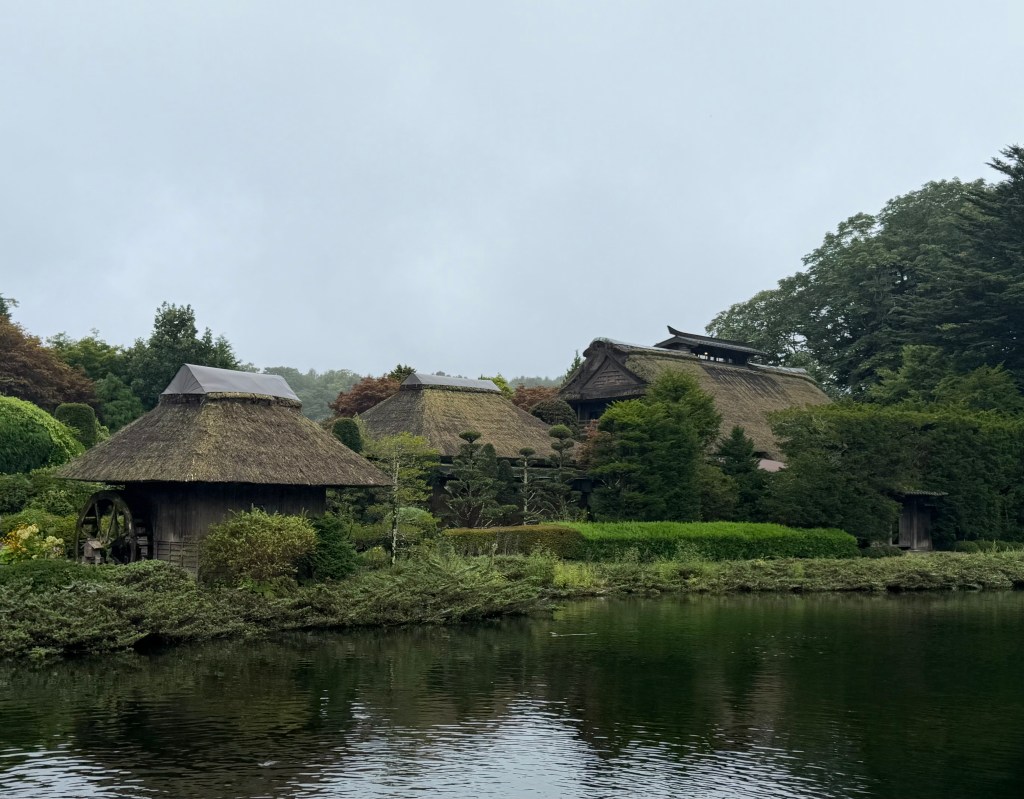
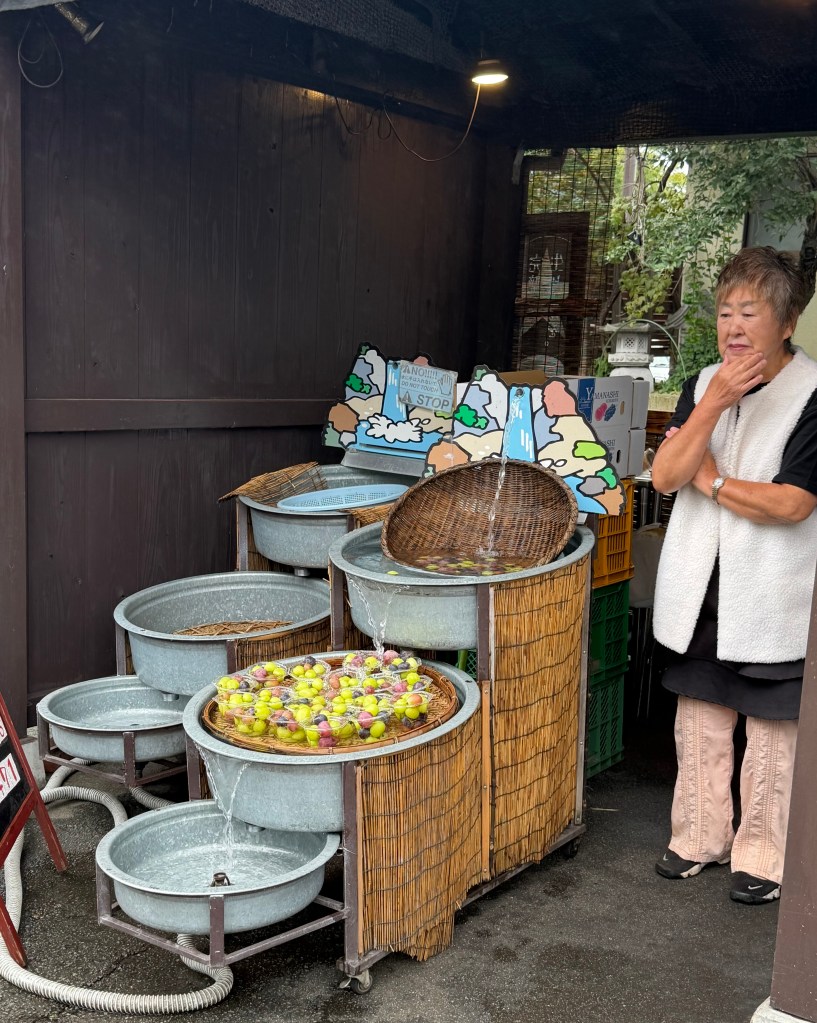
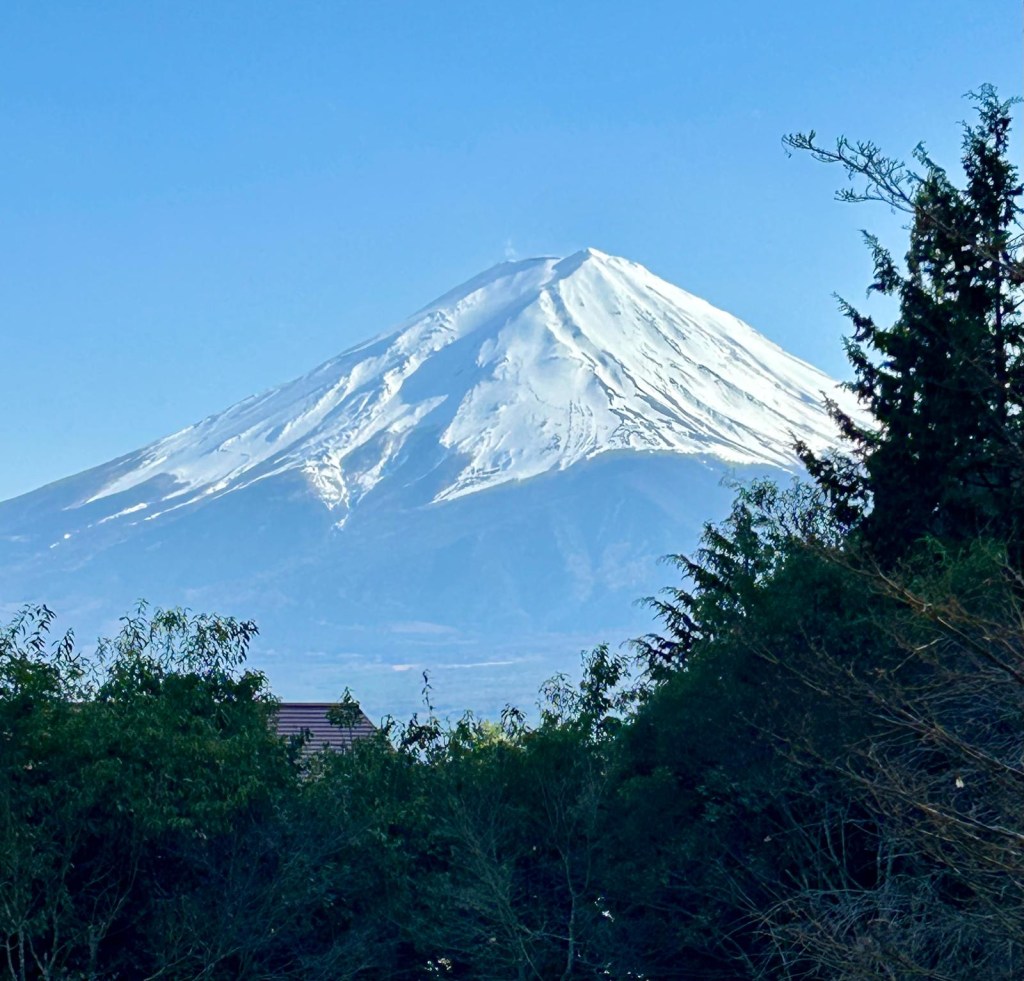
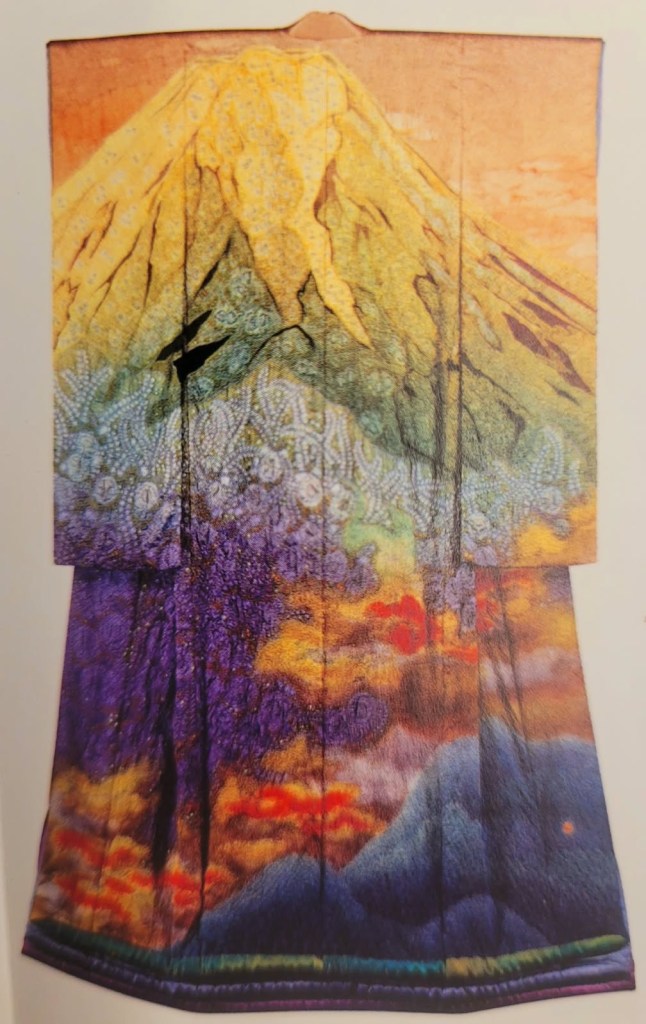
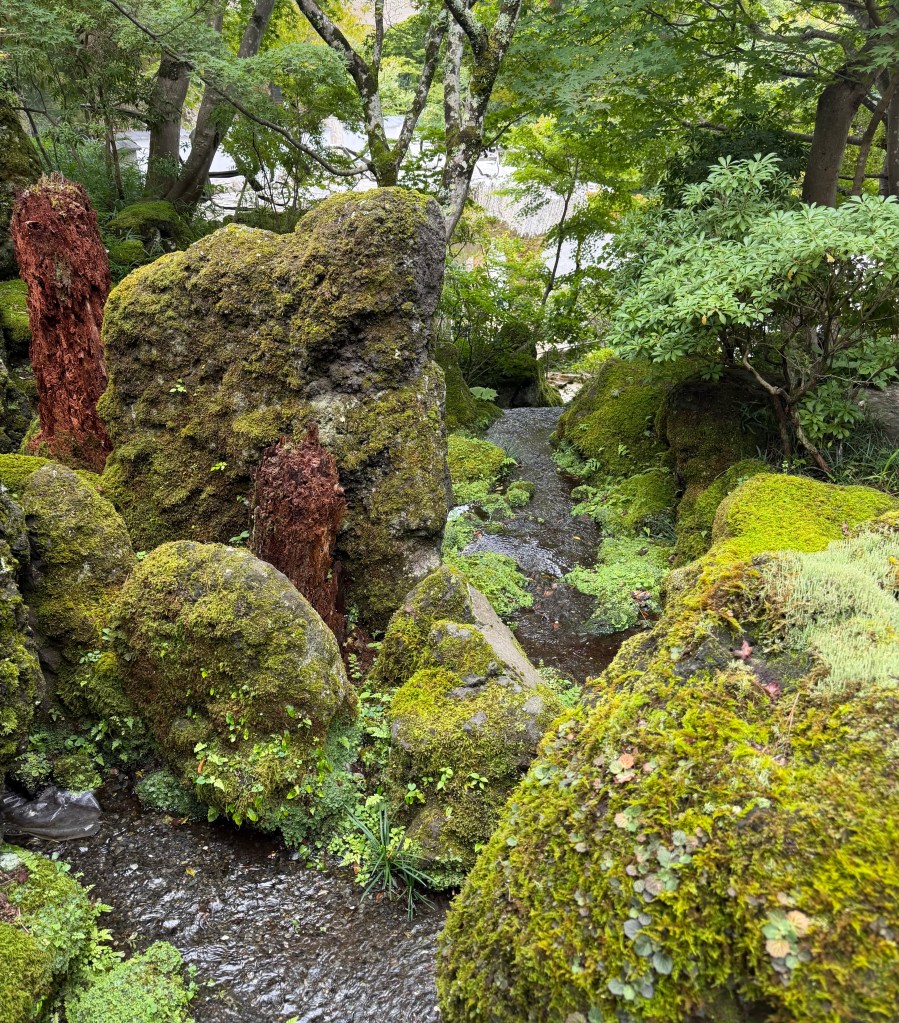
Oshino, a small village in the Fuji Five Lakes region, where we visited some of the 8 ponds fed by the snow melt from Mount Fuji.Mount Fuji is really there. Just can’t see it today because of the fog & heavy mist.King & Queen grapes sold from kiosk. No need to wash as that has been done. Can drink the water from the tap all over Japan.Did not see Mount Fuji today, but Melinda did 2 years ago in April.Another stop on this optional $300 tour was a visit to the Kubota Itchiku Art Museum. The museum is dedicated to the art of the kimono. Could not take pictures of the beautiful kimonos on display so had to resort to a brochure picture. The grounds were spectacular & also designed by the artist Itchiku Kubota.Grounds of the kimono museum.
Up next: Bullet train to Nagoya, train ride to Toba. More adventure.


Leave a comment